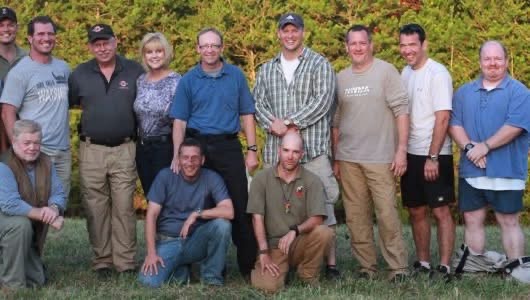
Five years ago today, a man who had become a brother to me, passed away.
His contribution to the training community was unique, and even years down the road no one has been able to take his place. My other brothers by choice – Craig Douglas, Chris Fry, Larry Lindenman, and Paul Sharp – and myself decided we were not going to let his work disappear. I had a bit more time than they did so I started gathering every bit of information William had put out and to find a place to put it. Rob Pincus generously and without any conditions offered to host the tribute page for free so everyone would be able to still learn from the amazing things William taught. I am forever in Rob’s debt for doing that. He did not have to, but being a good friend himself of William’s, he knew it had to be done. Rob also put up on the page two entire DVDs of William lecturing that he had been selling. He could have continued making money off of them, but instead acted for the greater good and the memory of his friend.
I spent weeks skimming the web, and everyone who had done an article, podcast, or interview with William gave their blessing to use those materials, and some people went out of their way to dig up links to give me. I can’t even name them all know, but I think I thanked them on the tribute page, and I’m even more grateful to them five years later.
I hope everyone goes to the following link and bookmarks it so William’s work lives on.
I could not do anything to keep William here, but I will be damned if I let his memory fade.
Over the past couple of decades revolver shooting has basically fallen out of favor with most in the mainstream self-preservation-oriented gun community. Since the mid-90s the polymer Striker Fired 9mm pistol has reigned supreme and most everyone who have started shooting after that has most likely had little to no experience with revolvers.
The problem arises when people newer to the community begin to comment on things they don’t have much firsthand experience with. Just as if someone who has only driven automatic transmission cars would be at a great loss if they suddenly were confronted with the manual transmission vehicle, so too is someone who only understands semi-auto pistols trying to wrap their head around the handling and operations of a wheel gun. When your entire training, experience, and knowledge of revolvers comes from a single half-day in a single training class, you really need to keep your thoughts to yourself about the efficacy of wheelguns. You quite literally don’t know what you don’t know.
Too often people try to talk about the pros and cons of revolvers without really knowing what those pros and cons actually are, and the nuanced understanding that only comes from a depth and breadth of experience and knowledge.
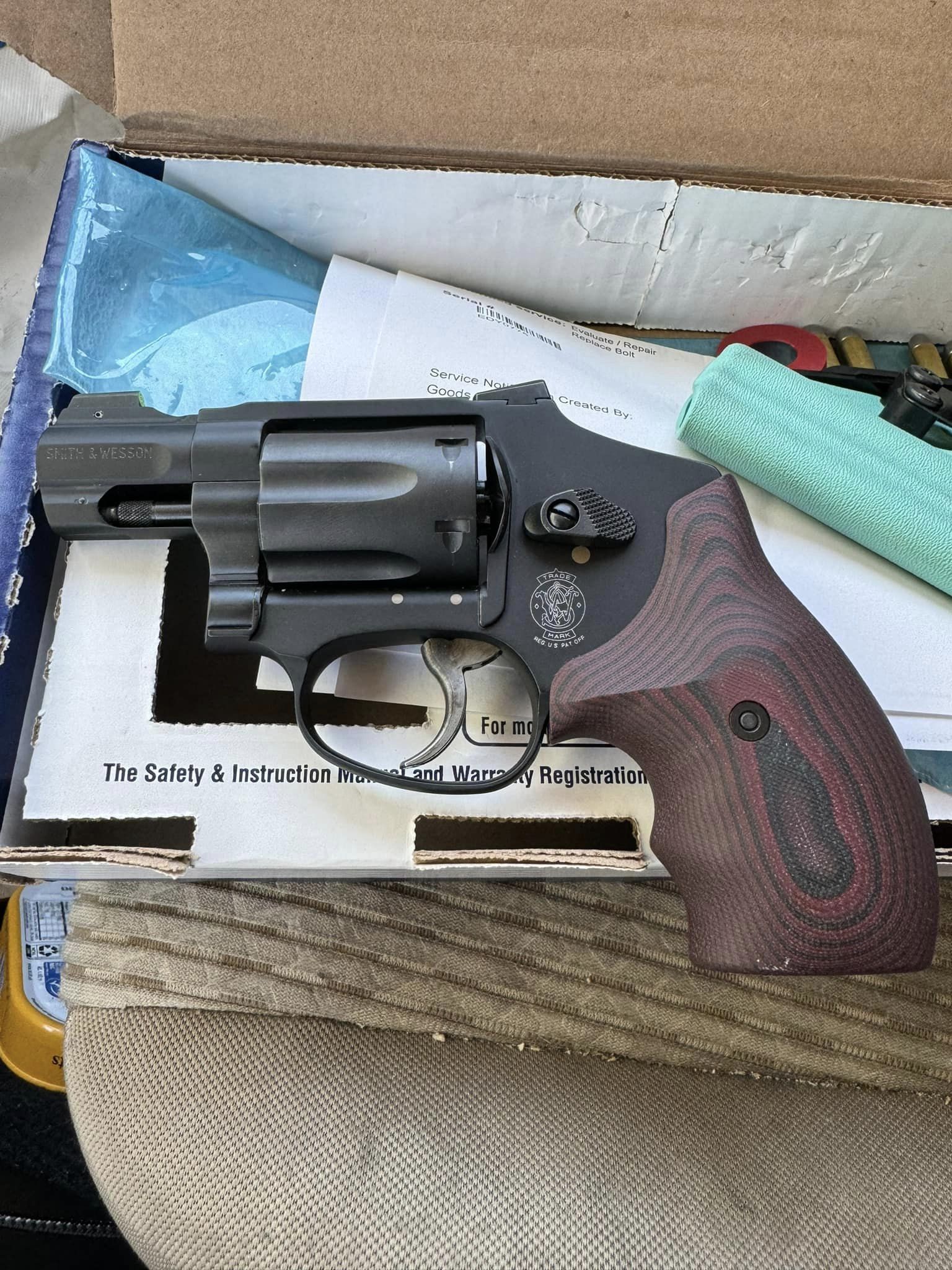
A shining example of how little knowledge these people possess is their criticism they throw towards revolvers as firearms that are harder to shoot than a typical polymer Wondernine. That is actually not completely the case. There are ways to make revolvers easy to shoot with very little time, effort or money. Quite possibly the single biggest advantage to making a revolver easier to shoot, and one in which it is totally superior to all semi-auto pistols, is that in the grips.
Many modern pistols have minor tweaks that can be made to the grip. For example, a lot of them come with interchangeable back straps and a very tiny few of them come with interchangeable grip panels. However even with that there is a very, very finite level of adjustability that the end user can do. Any more that’s needed to really fit the hand requires major work at the level of an experienced gunsmith which then requires a lot of time away from the owner, a great deal of money, and the inordinate hassle in sending it off.
Revolvers on the other hand can be easily adjusted to fit anyone’s hand, and that adjustment can be done by the end user essentially using a screwdriver and a few minutes worth of work. The revolver never has to be sent away, nor do they require a long period of time for the gunsmith to do the work.Most major revolvers have a huge aftermarket with an incredible number of options in which nearly any revolver can be made to fit anyone’s hand or for their particular context. Grip manufacturers like Hogue, Pachymar, Altamont, Badger, Etc. offer wood, G10, or rubber grips and almost any possible configuration that an end user could want. And all of them can be installed with a screwdriver and less than 5 minutes worth of work. Furthermore, unless you desire a particularly rare wood almost all grips are under $100 with most of them being under $50.
None of that is true for any semi-auto pistol on the market today. I as the end user can configure my revolver to fit me exactly how I need it in nearly the blink of an eye. So the next time you hear someone comment online or in an article how revolvers are tough to shoot, understand that they most likely have a limited knowledge base, probably don’t know the nuances of running or carrying a revolver, and are probably not the people to talk to about wheel guns. Instead take an extra minute or two to find the true subject matter experts like Wayne Dobbs, Chuck Haggard, Tom Givens and a small handful of others. Get their thoughts on running a revolver and follow their suggestions. And ignore the YouTube Influencers who have zero time in understanding the subject.
There is a lot of dogma in the training community – both on the Gun side as well as the martial arts side – with a lot of black-and-white statements being made. Examples like “95% of fights go to the ground”, “No private citizen ever gets into an entangled fight with weapons”, “If you carry a revolver You’re gonna get killed because you’re going to run out of ammo”, “No private citizen will ever reload in the middle of a fight (strange how those last two things get said by the same people over and over again and they don’t quite see the disconnect in their own statements)”, and many other similar pronouncements.
The problem is that there is no data behind any of those assertions that meet the standard of the scientific method. Generally data that is presented as the truth in the training community results from either self-selected cherry picking that always seems to meet the preferred narrative of the selector, or it’s anecdotal – In other words “I watched a lot of videos”. Neither of those are empirical evidence. There are very few people in the training community that Has a depth of background with knowledge and experience In the scientific method, and they don’t understand how to gather data or to analyze it. I’m in the middle of writing an extended article explaining the scientific method in Layman’s terms, but for now let’s just leave it at this.
One point of contention in the community though can actually be solved fairly easily with evidence that meets the standard of the scientific method is the argument that pistol mounted optics (PMO) make it easier for a new shooter to get good at shooting quicker than iron sights.
This debate rears its head fairly frequently with the virulently Pro-PMO people saying of course that’s true, while those who may or may not be favorable to PMOs will argue that either iron sights are easier or there is no practical difference in the learning curve. However, rather than continue this debate ad infinitum with just raging arguments and no facts, we can solve it without a lot of hassle or extensive preparations.
Here’s the science based solution. We need a decent size group – I’d say anywhere from 20 to 50 people – and then using a random number generator we can split them into two equal groups. All of them will need to have no experience in shooting handguns, and preferably they have no experience in any shooting of any kind, but that may be a bit difficult to arrange. Sometimes reality makes true data gathering a pain in the posterior. Then we can pick a time standard for how long their instruction will be. For example, we can say we will do an instructional period of 16 hours. Then we decide on a handful of metrics that we can use to track progress. Perhaps a combination of the FBI qualification, An El Presidente, a Bill Drill, and possibly a Vickers Test. We would need a few different metrics to ensure completeness, but 3-5 along these lines would be an excellent choice.
Then we take one of the groups and put them with an experienced PMO instructor, and the other group is put with an instructor with long experience teaching people to shoot with iron sights.
Put both groups through the 16 hours training, run them all through our metrics, and then compare the results of the two groups. That is not a difficult experiment to run and that actually meets the rigorous standards of the Scientific Method. With that you now have data to say one way or the other, yes PMO’s make it easier for new shooters, or no, there’s no real difference.
Again to be clear, the group learning on iron sights must be taught by someone without a bias against iron sights. This is where the data can easily get corrupted. Having an extremely pro-PMO instructor teaching the iron sight group violates every aspect of true data collecting.
The study is not that hard to run as long as you have at least two instructors who are seriously interested in the truth and are willing to put just a bit of time into it. As a true student of what works in the real world, I for one would love to see this. Unfortunately in today’s Social Media driven Paradigm, controversy and Clickbait rule supreme. I doubt a study such as this will ever be done, even as simple as it is.Too many instructors (on both sides of the debate) don’t actually want to know the truth, they just want to present the narrative they prefer.
There is a tremendous misunderstanding in the self-preservation community that KNOWING a technique equals being able to EXECUTE the technique. Nothing could be further from the truth. The gap between those two things is a mammoth one, and if that is not understood and dealt with, we could be setting ourselves up for failure at the most catastrophic time.
The idea that just knowing a technique is enough is a pernicious one, and one that is fueled by either delusional or willfully negligent instructors because it is an easier sell. Take for example the typical retention live fire range shooting method taught in far too many gun classes. You as the good guy stand in front of a compliant, non-moving, two dimensional paper target. On the signal – when you are completely ready and prepped – you use your weak hand to palm smash the target, step straight back, draw your pistol, and smite the foe. This seems to make tons of sense and it makes the practitioner feel good. However the chance that it works in the real world With the typical person, who has only worked this technique for maybe five minutes in one single shooting class, has no striking ability built in before that, And almost assuredly will never practice that move with full power against a resisting opponent is ludicrous to contemplate.
The main reason it is taught is because it is easy to teach and it is easy to do. Unfortunately that has nothing to do with actually working in the real world. This technique is easy to know and learn, but after a maximum of 15 minutes of working it, there’s not one human being on the planet who would be able to use it under actual conditions if that’s their total experience and time invested. And shame on any instructor who would suggest otherwise.
Think of any other physical activity that we would do.Learning how to play guitar for instance. I’m sure there are a lot of people Out there who have taken up the guitar. Learning to play a cord or a note is not that difficult. However anybody who has done it will know it can take days, weeks, months or even years to actually be able to play a song that sounds like a song. The technique of guitar playing is fairly simple but the execution is incredibly complex.
For those reading this who have spent any time learning Defensive gun use, Think back to your first class. Draw stroke, presentation, Smooth trigger press, recoil control, follow through.
All things that are simple and easy to follow. But how long did it take you to get reasonably proficient at these very simple actions? Did you have a perfect trigger press right after the instructor told you what that was? Did you have a perfect draw stroke every single time during each following drill? Was every piece of the shooting cycle perfectly executed every single time? No, of course not. Mistake after mistake after mistake, round after round after round. Maybe after hours and hours and weeks of dry fire practice and 1000 rounds of live ammo you started to pick it up. Is that all there is to it at that point or do we still have to work? The answer of course is yes. That is why we continue to take more and more shooting classes because as we learn more we get better, but we need that practice especially under the eye of an instructor. Has the technique changed one bit? HAs the draw stroke become different? Has theTrigger press changed? Is there a new way to work on follow through? No. The effort is all about becoming functional in the technique that we learned long before. And that only comes from continually work, repetition, and drilling. In other words, time and effort. Just learning a new technique is only the smallest and least useful part of the paradigm.
Refer above to my retention shooting example. Easy technique, but one that will take much effort before you can even slightly rely on it for the real world.
Where this is a great issue is in grappling. Grappling, either standing or on the ground, is the most chaotic and variable aspect of human combat. Even the smallest fractional physical change can completely alter the course of the fight, and that change can literally happen in the blink of an eye. It takes a lot of work to be able to process these changes against a true resisting opponent. Just knowing a move is close to useless.
When jiu-jitsu first started making its global impact in the late 80s and early 90s, a lot of traditional martial artists were threatened. Rather than accept and admit they were inadequately prepared to deal with grapplers, many of them would talk about their “hidden” moves in the set forms without understanding that you can have thousands of hidden moves, but if you are not practicing them, and practicing them correctly (against a physically resisting opponent, with mental will to do so, and has malevolent intent to make you lose as well as the freedom of action to do whatever he wants) than the chance they will be able to use any of their secret moves in real time is slim and none.
Similarly, if someone who has almost zero legitimate grappling background and their martial background is a striking based system, said person will have no clue how to be successful at any grappling moves, and has even less chance of teaching it, regardless of how much knowledge he has from reading books, or watching instructional videos.
If someone is trying to tell you here are the hacks to be successful at anything self-preservation related, and they are focused on technique, know that they are frauds.
Bronx: Commonwealth Avenue & Westchester Avenue, officers from the @NYPD43Pct responded yesterday to a report of a male shot. Upon arrival, officers found a 27-year-old man unconscious and unresponsive with gunshot wounds to the shoulder, chest, and neck. He was transported to… pic.twitter.com/EfiWBP0y5Q
So we have another recent entangled fight where a firearm was in play, and only involved private citizens.
Some interesting points to consider.
The bad guys made the commitment to become attached to the good guy, and did so before he was able to get his gun out. This is a very typical approach by bad guys, especially since neither of them seemed to be armed themselves, so their entire methodology of achieving their goal would have to be in contact and apply physical force to get what they wanted. Keep this in mind when people on the internet insist that entanglements on the street don’t happen, and that bad guys don’t act this way. I would like one of these commentators to explain how a violent criminal actor who is not armed with a gun will try to accomplish his goals?
The good guy was extremely fortunate that the bad guys violated the first rule of real world grappling by not monitoring or controlling the other person’s hands. If just one of them had grabbed over the arms, the good guy would not have had the ability to draw.
And the good guy was even more blessed in that he got a good hit by pointing the gun vaguely behind him with no visual of physical indexing, and had only a partial grasp of where the bad guy was positioned to get a fight stopping hit. No reasonable firearms instructor would teach to shoot this way, nor to expect a single round stop, So anyone trying to take away from this that grappling training is not needed would be making an insanely foolish mistake.
Look at the environment. For those who would pontificate about how to avoid the entanglement by bleating to “make space” or “break contact”, where and how is that possible? This is a sidewalk with a hard border of buildings on one side, traffic in the street on the other, and tons of the typical objects that exist on any city street in America.
We need to learn from these actual incidents, and understand them to be truly prepared. Unless your plan is to hope that you will get lucky like this guy. Not what I would call a smart option.
There is a continuing argument in the Self-Preservation training community on what constitutes the “best” training.
A shooting-centric person may push for a set standard – you must be an ‘“A’ class level shooter or you will be killed in the street. Or perhaps the gun focused person will pontificate that you must have a certain piece of gear set up exactly as they choose, and if you do not, then you are “ a poor, lazy, or stupid” (an actual quote from someone in the gun community BTW). If the commentator is from the military of LE side, they may push the narrative that if you are not doing shoothouse CQB then you are not prepared for combat.
A person coming from the combatives H2H side may argue that if you are not at least a purple belt in Brazilian Jiu-Jitsu, you are not serious about fighting. Someone who loves to light weights and do heavy cardio could try to belittle you if you can’t squat twice your bodyweight and therefore you are lazy and not serious about self-defense.
It goes on and on. Gatekeepers will try to say their preferred gate is the only path to being truly ready for the street.
The discussion is important, but there is so much wasted bandwidth spent on the subject because the underlying premise is completely false – THERE IS NO PERFECT TRAINING METHOD/DRILL.
No singular modality matches any “fight”. Not a single one. Nothing can completely recreate and match the requirements of real world combat. For two simple reasons.
One, real world combat is not a singular thing. It can look different in hundreds of ways. The conflict may be a methhead accosting you at a Gas ‘n’ Sip. Or it may be a mob of teenagers running up to you as you leave a restaurant. Or it may be an active shooter rampaging in the mall you are in as you shop with your two small children. Perhaps it is a dedicated ambush of a LEO on the job. I could go on. How can any one training paradigm prepare you for the possibility of all of these?
And the second reason that no single method is complete is because no matter how hard we try, and how clever we are, when we are training, we can never be surprised. There is not a single way to simulate surprise when you have already made the commitment to show up at a given time, at a given location, and have agreed to participate in training with other people. All of those things preclude the ability to be surprised, and so we can never completely replicate reality, where we will be surprised in some fashion.
No single modality matches any fight. We train in multiple lanes to build multiple components, and then do things like FoF against freely acting opponents to try to coordinate the components as best we can. Practice pieces, as well as practice integration, and do all as often as you can, and understand there is not a set moment where we arrive at the final stage of being ready. It is a road, not a destination.
If you read any of my previous articles or posts, you probably realize I’m obsessed with clarity of language. I was fortunate with having some high school teachers and college professors who showed me that if we are going to communicate with others, if we are going to try to convince them of our ideas, or we are trying to let them know they are wrong, we need to speak as clearly as possible so there is no chance of miscommunication. Because that leads to wasted time, wasted energy, and probably failure.
That inclination has only been reinforced the past 35 years of being an instructor of hand-to-hand combat and firearm, as well as being associated with master instructors like Craig Douglas, Chris Fry, Tom Givens, as well as many others. We cannot afford shortcuts that lead to misunderstandings if we are teaching and talking about things that may save lives or prevent injury, and it is crucial we must be understood perfectly.
Following that, I sometimes take issue with certain terms or descriptors in the training community. Some people have been upset about it and take me to task (the things written and said about me when I pointed out “stress inoculation” is not really a true thing was amazing, especially since much of it came from people I considered friends) and some people say I’m being pedantic. Possibly they are right on that last point, but I prefer to err on the side of clarity. In that vein, I no longer use the term “Fitness” to describe a certain aspect of training.
Unfortunately while Fitness is arguably a good descriptor, it has gotten tied up with certain specific imagery and concepts, and it has become easy for people who don’t want to do the work to become fit to use that terminology as a way to disparage the very idea.
For a good amount of time now, I only use the terms health or vitality to get the idea across that it is key to everything we do in self-preservation. Fitness has been co-opted and used almost solely to describe super heavy duty and hardcore strength and conditioning type work. Too often people assume you are only talking about long, extended and debilitating work that involves incredibly restrictive dieting, long hours every day lifting weights or running or on stationary bikes or using foam rollers etc. And that to be “fit”, you must have a body fat of 5%.
While these things may be part of fitness, they are only part. It is like saying defensive handgun use only involves long hours running and gunning in USPSA matches, or doing complex team room clearing exercises as if you are a SWAT team. Health and vitality encapsulates so much more. It is truly at its essence is all about having the ability to live your life to the nth degree and enjoy the things we should enjoy and do so comfortably without much effort. Unless you are a professional gunbearer who must run to the sound of guns, or you are involved in extended criminal activity, the chance you will get into a gunfight is very small. However the chance you will die of a heart attack, a stroke, cancer, diabetes, Alzheimers or similar issues is on a monumental order of magnitude greater.
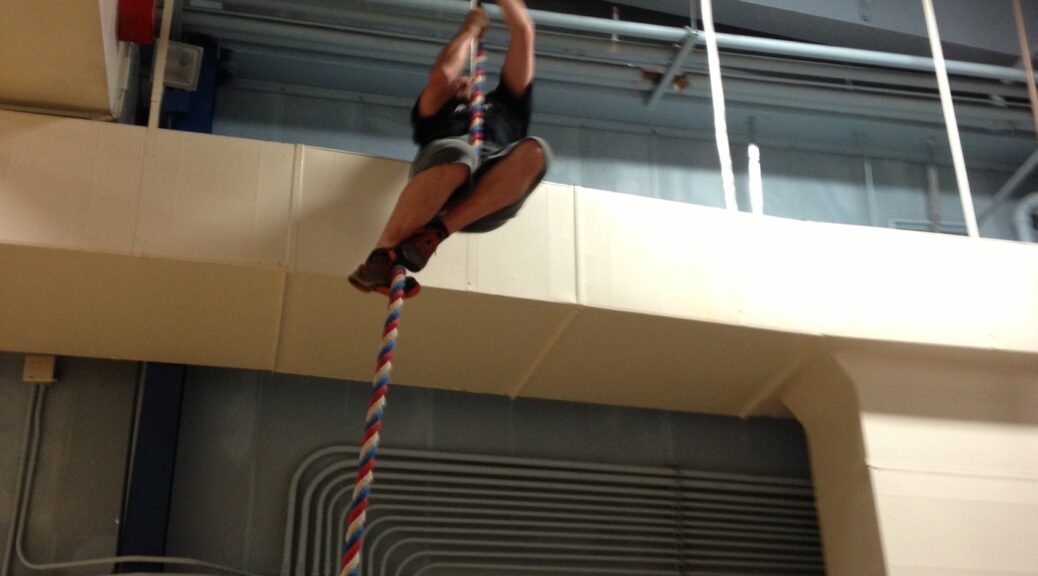
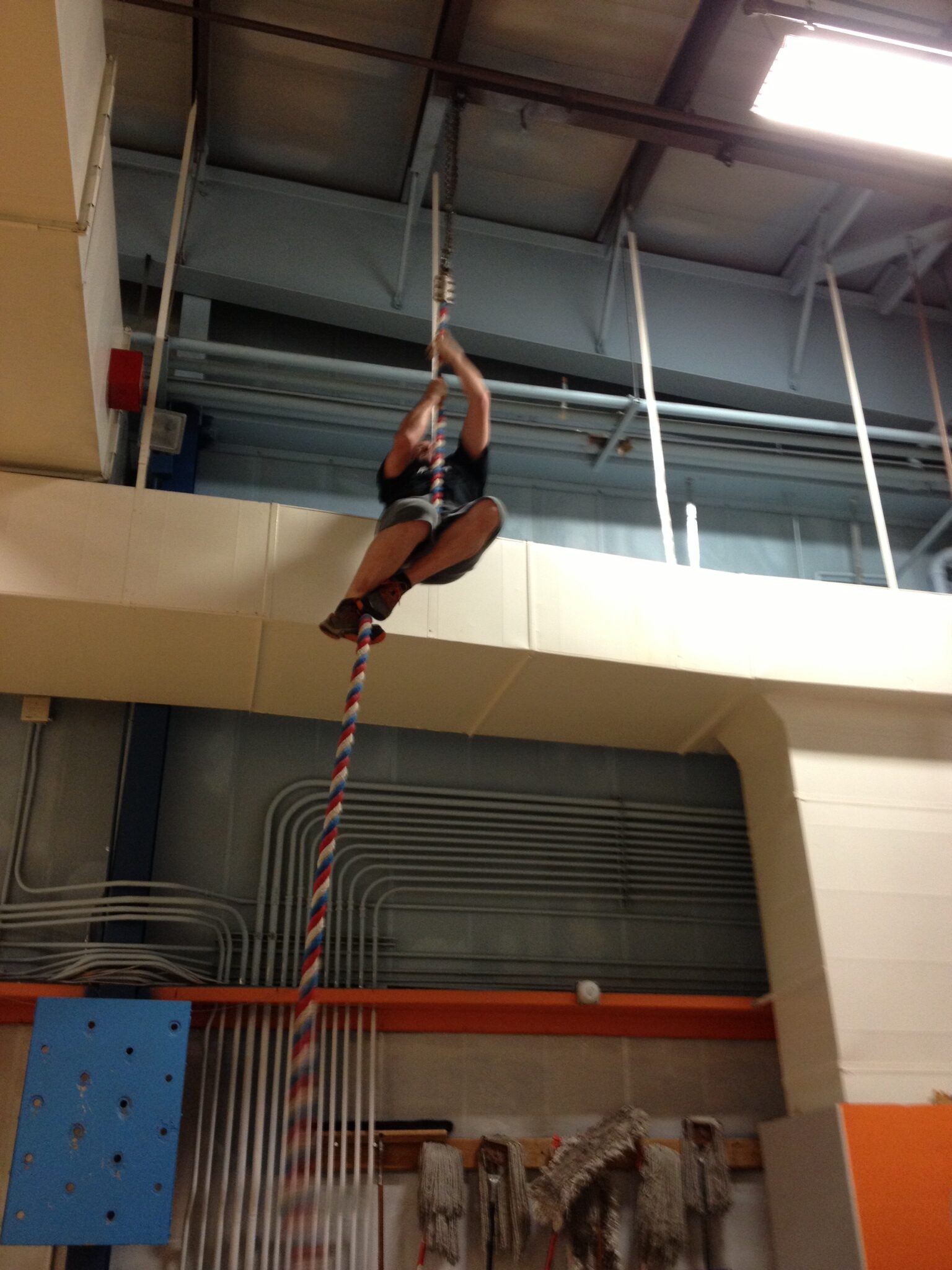
And beyond that is the ability to pick our kid up and carry them for miles when they get tired at Disneyland. Or pick them up and carry them when you are caught in a natural disaster and need to get to safety. Or grab them and run when your house is on fire. What if you are involved in a car wreck? Can you get your way into the vehicle and pull your kids or spouse out? Do you even have the ability to move yourself unaided for distance in a timely manner? Years ago, my extended family went to Disneyland and the hotel we were at had a giant fire in the lobby (a huge Xmas tree there caught fire) and we had to evacuate at 3 in the morning. I carried my grandmother (who had to use a wheelchair) down five flights of stairs and about a half mile away until we were able to use the wheelchair, while my brother carried his two kids. I did not have to draw my tacti-cool gun and shoot down marauding Ninjas, but I did need to save her life and it had nothing to do with “fighting” but only with health and vitality.
In other words, are you an asset to your loved ones, or are you a liability? If all you bring to the table is a subsecond draw, then you are not the former at all.
When someone argues that “fitness” is not important in self-preservation, they expose their personal bias, and narrow frame of reference. Getting killed by a bad guy is low on the list of threats in the first place, so focusing exclusively there is equal to trying to figure out how many angels can dance on the head of a pin. Absolutely we need to work on the skillset to handle that niche, but we also need to look more broadly. Being a great gunfighter is awesome, but it does you little good if you stroke out at 52 and leave your family without you.
I am a history nerd, especially when it comes to self-preservation studies.
It is crucial that we learn from those who came before us, mostly so we don’t waste time. Certainly we don’t wan too waste time on doing the wrong thing so looking to what has already been shown can prevent that. But there is another issue as well. We don’t want to waste time reinventing the wheel.
Why is that so critical? Because unless we are trust fund babies of a billionaire, we have limited to train, practice and learn. There are so many things we need to learn, and all of them require a significant amount of time served before the information becomes functional. So in order to cut that curve down. let’s see what has already been proven to work to speed us along the path.
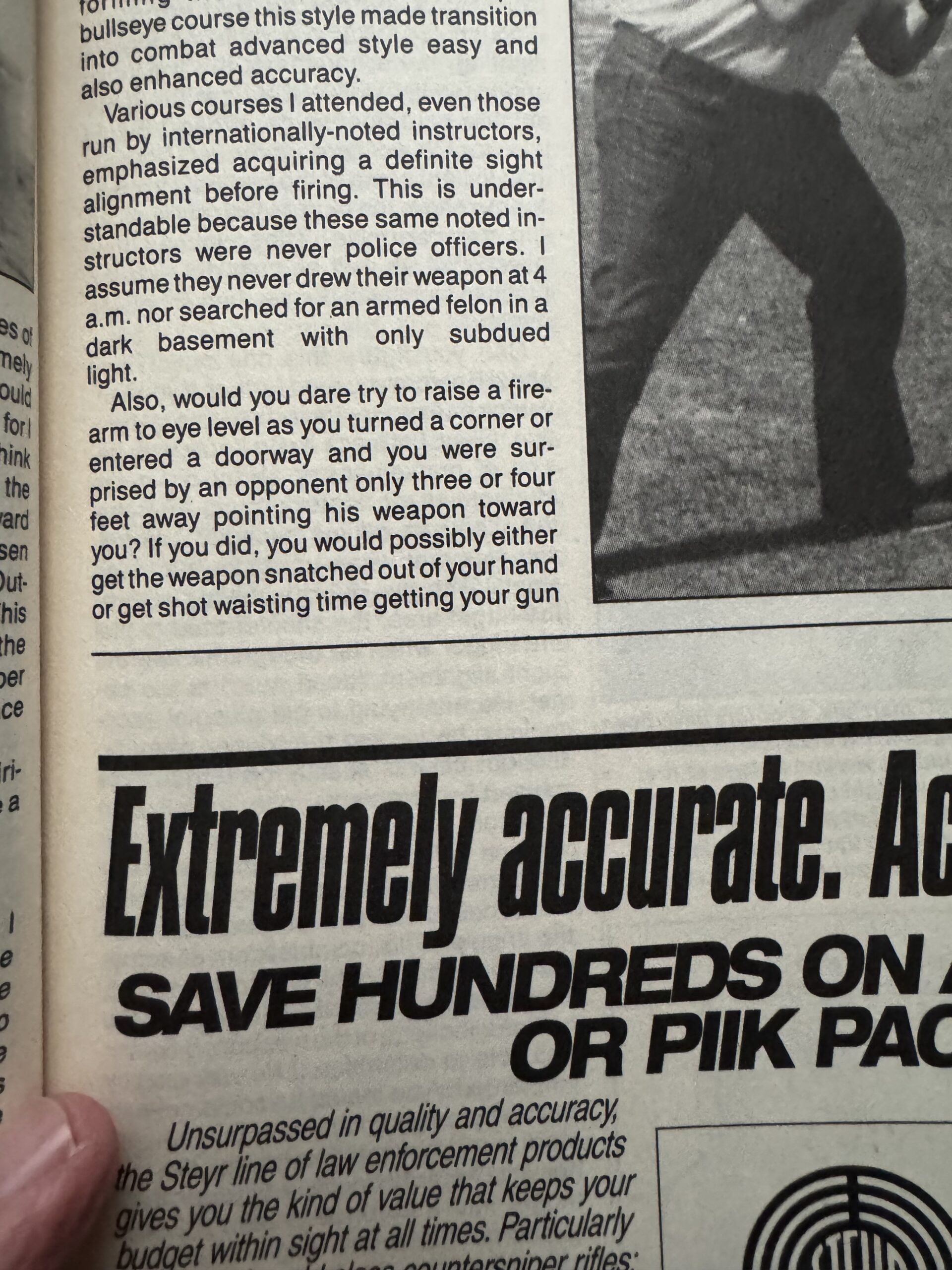
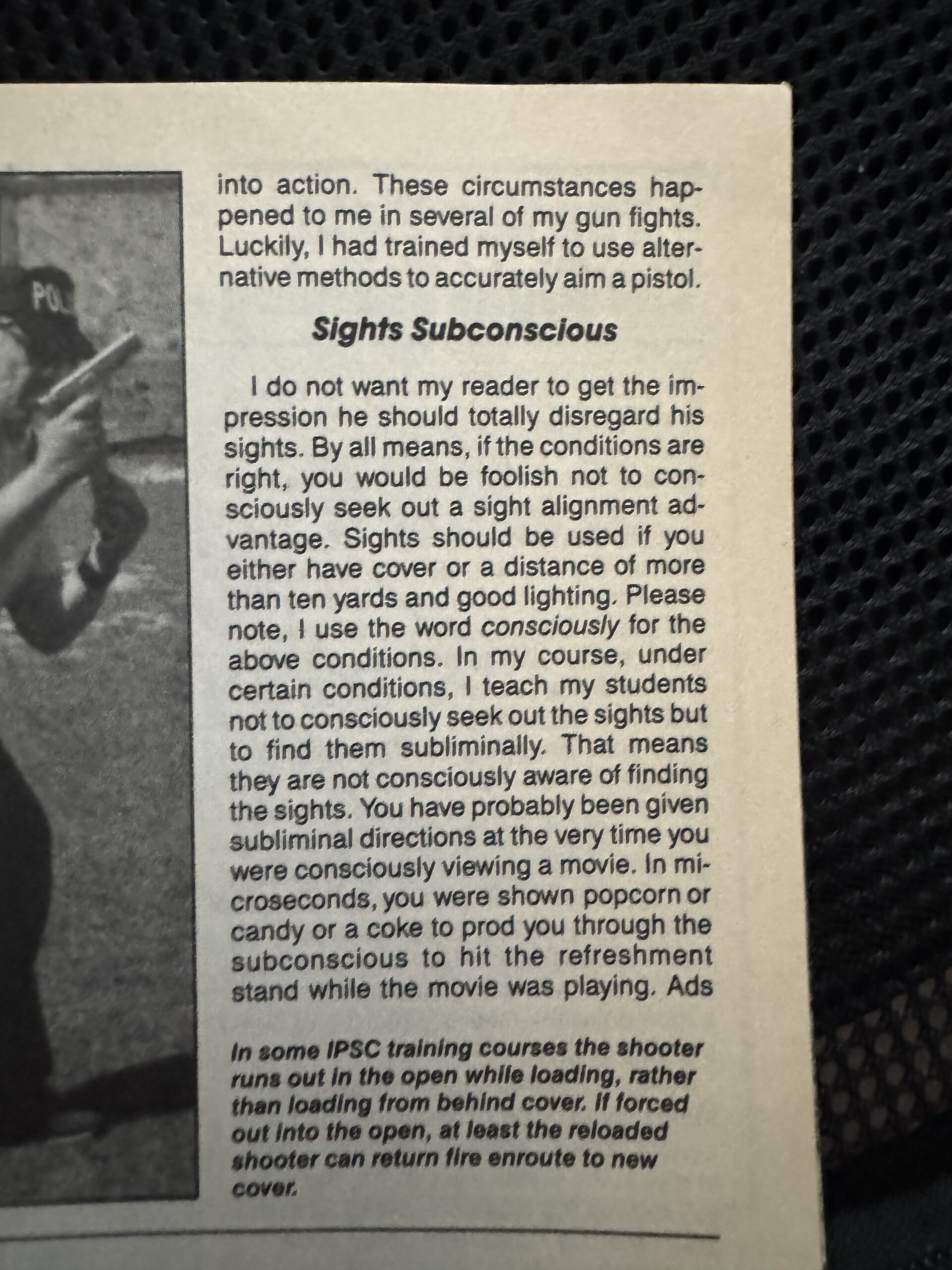
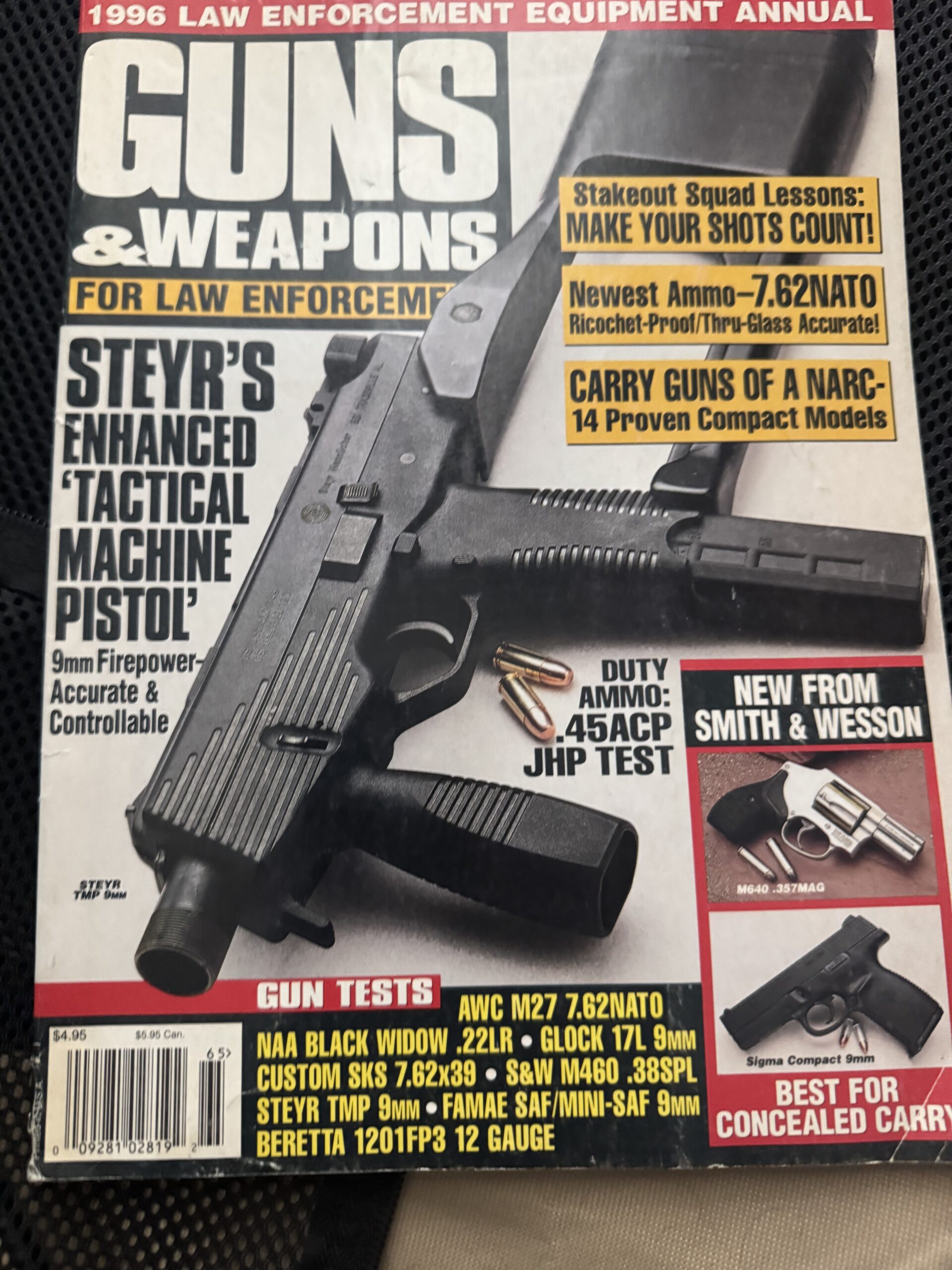
One key place to look is in the lives of the been there, done that crowd. For them, this is not theory, but how they stayed alive. One of the greatest in that regard is Jim Cirillo, who is one of the most experienced gunfighters of the 20th century, with multiple documented gunfights. We are blessed not only to know about him, but also in that he wrote and talked about his experiences fairly deeply. He wrote one book, and produced two videos, but did many interviews and he himself authored many, many magazine articles, as well as taught classes public in the 1980’s and 90’s. When he says something about how, what, and why that we need to understand about surviving a gunfight, we need to close our mouths and listen.
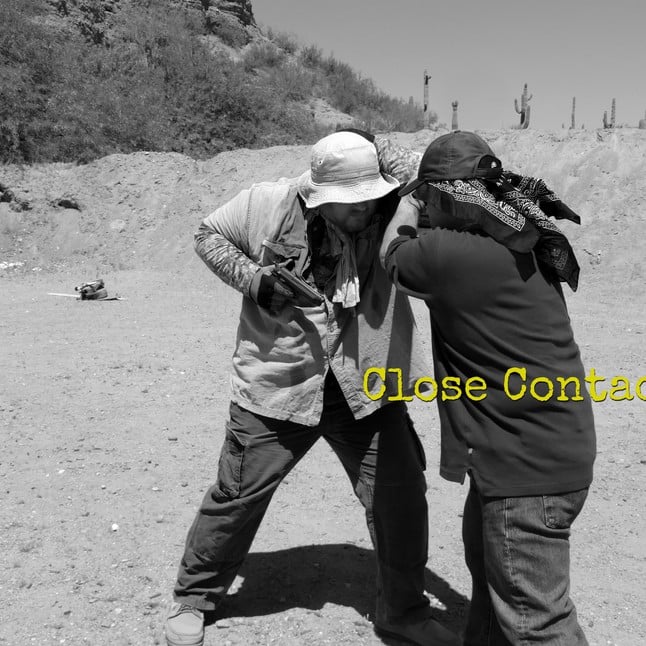
The accompanying pictures are from an article he wrote for a magazine in 1996, in which he clearly states the absolute possibility that the gunfight may very well take place at contact or near contact distance, and the you need to plan and train accordingly, and that you need specific techniques to deal with it.
We probably should listen to a true authority like him.
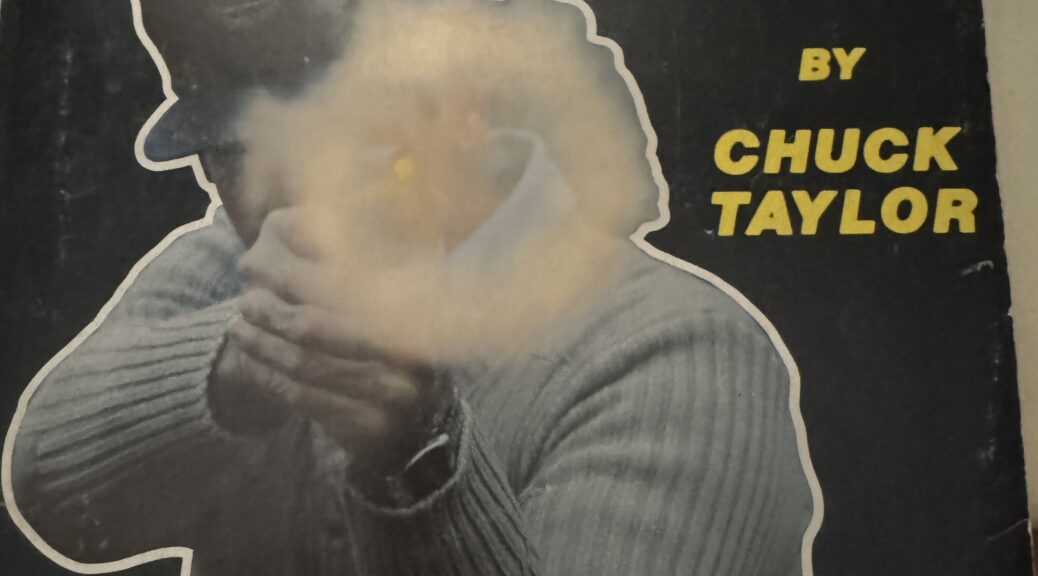
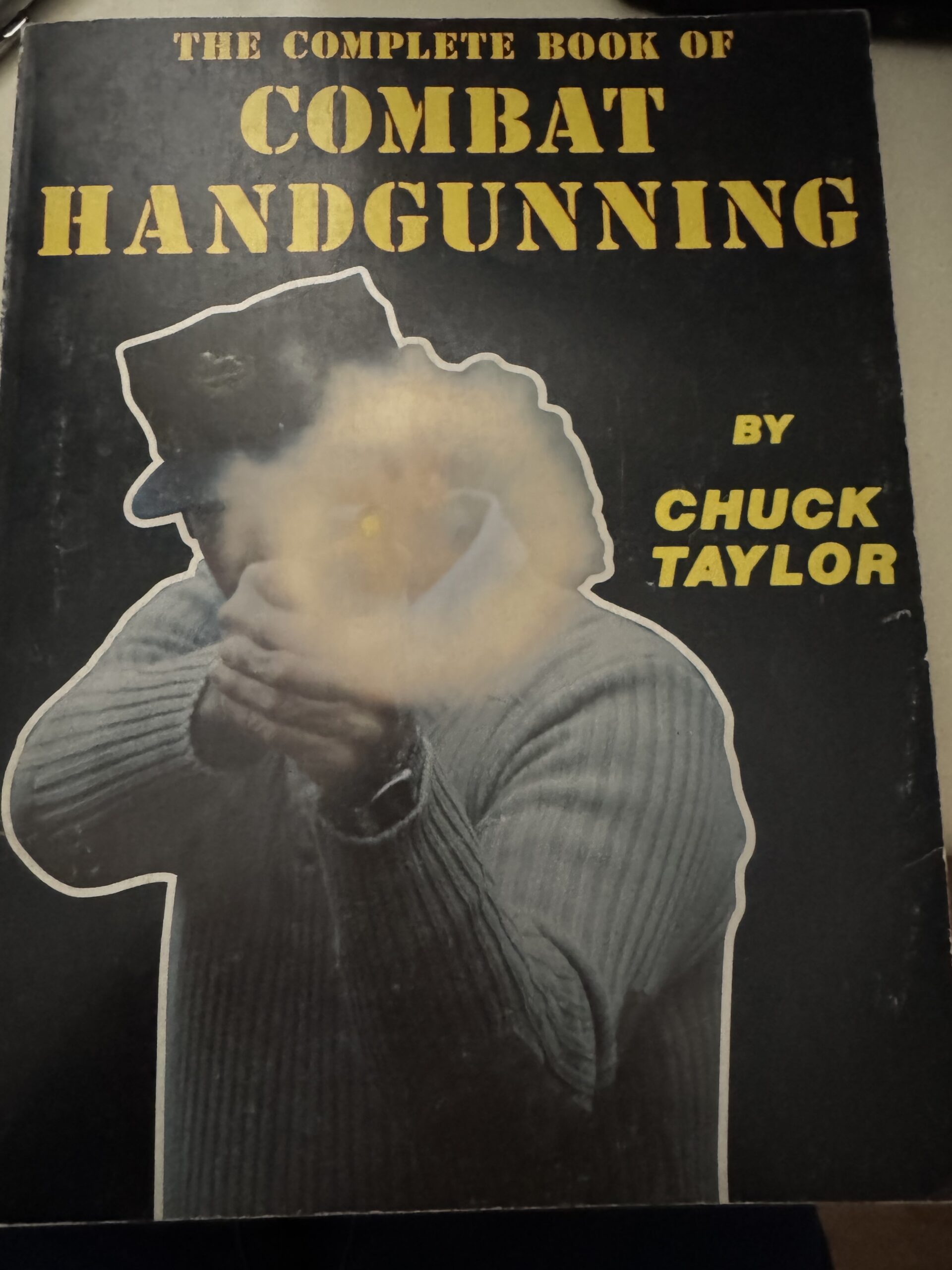
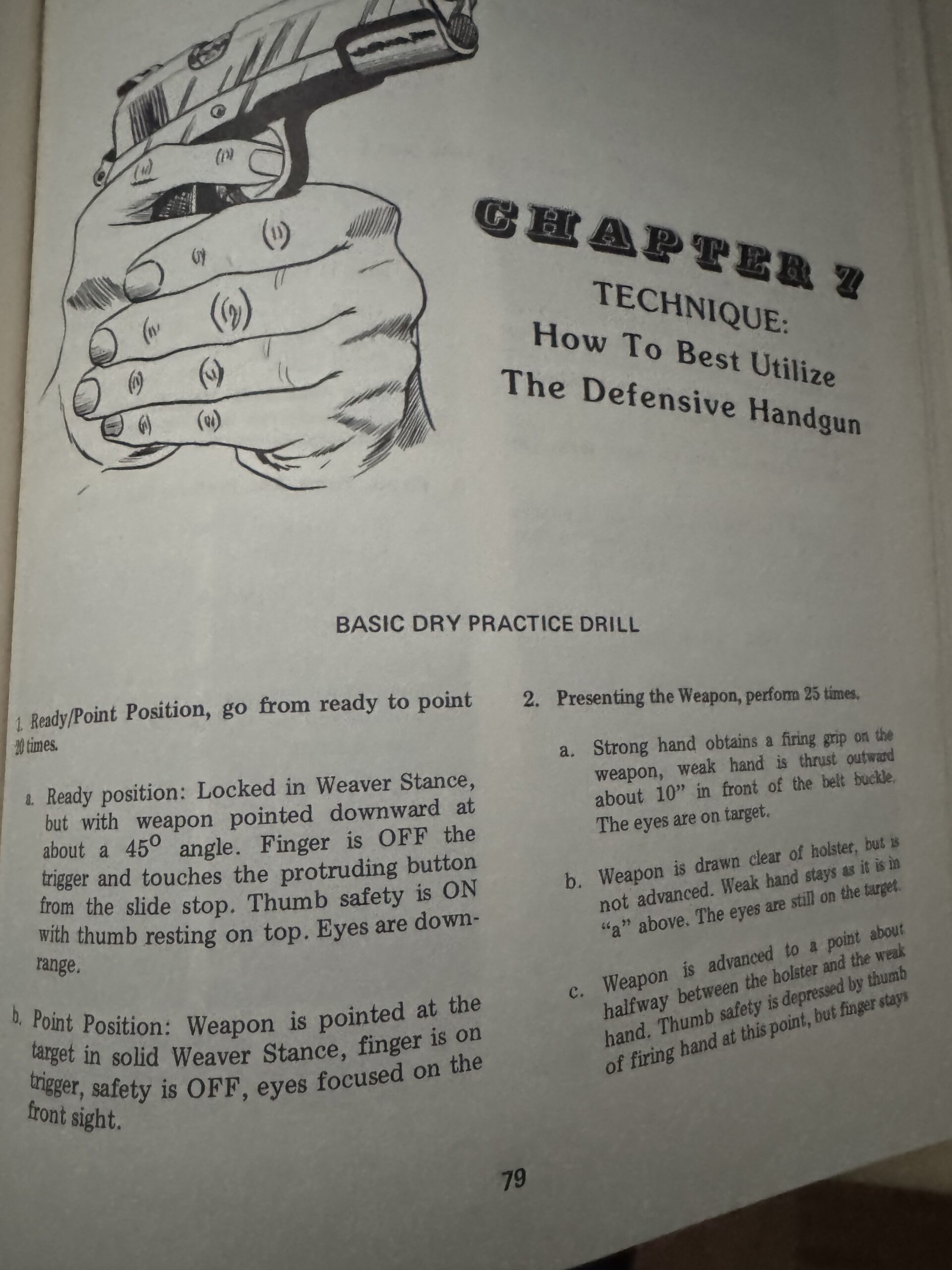
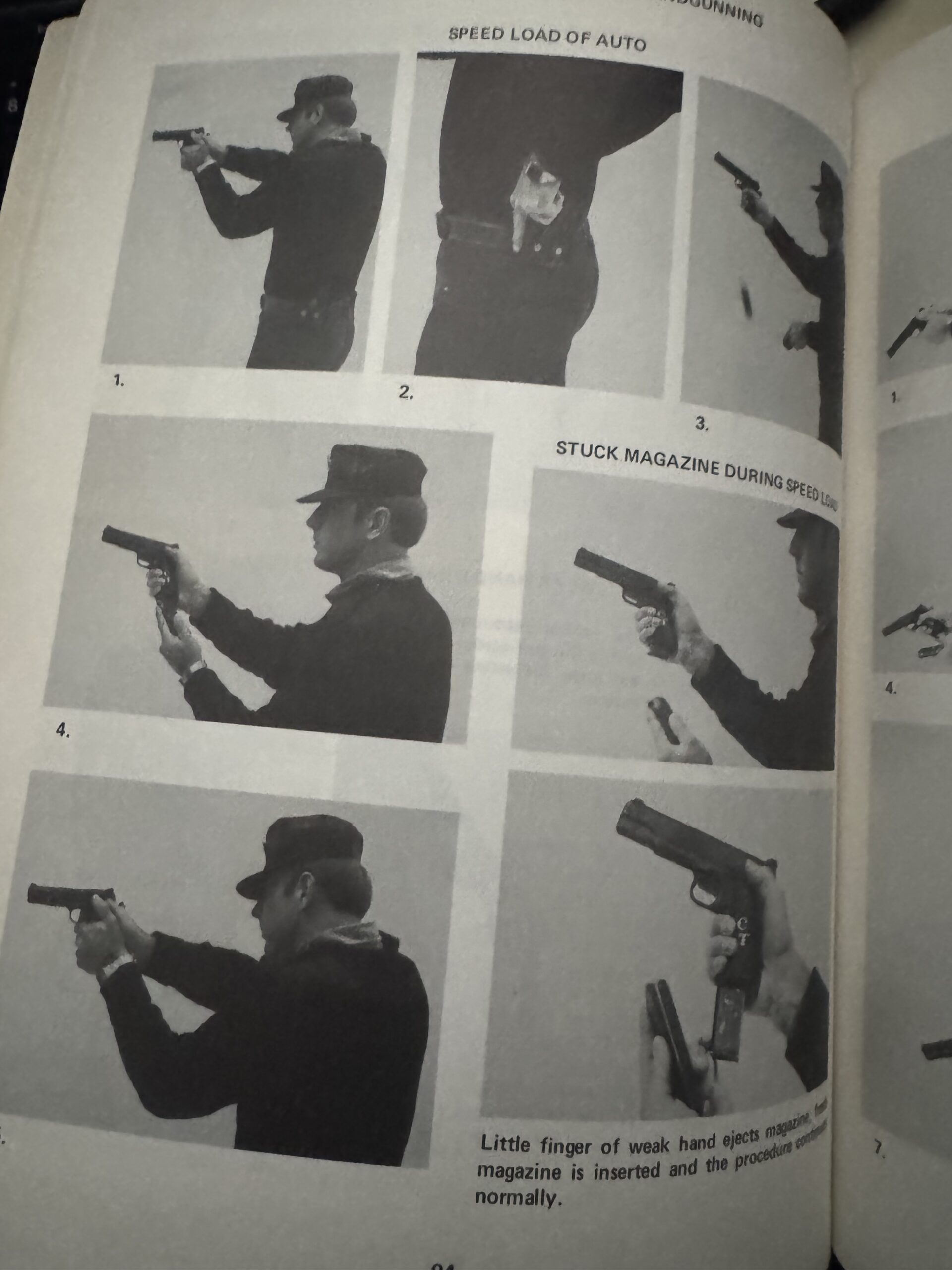
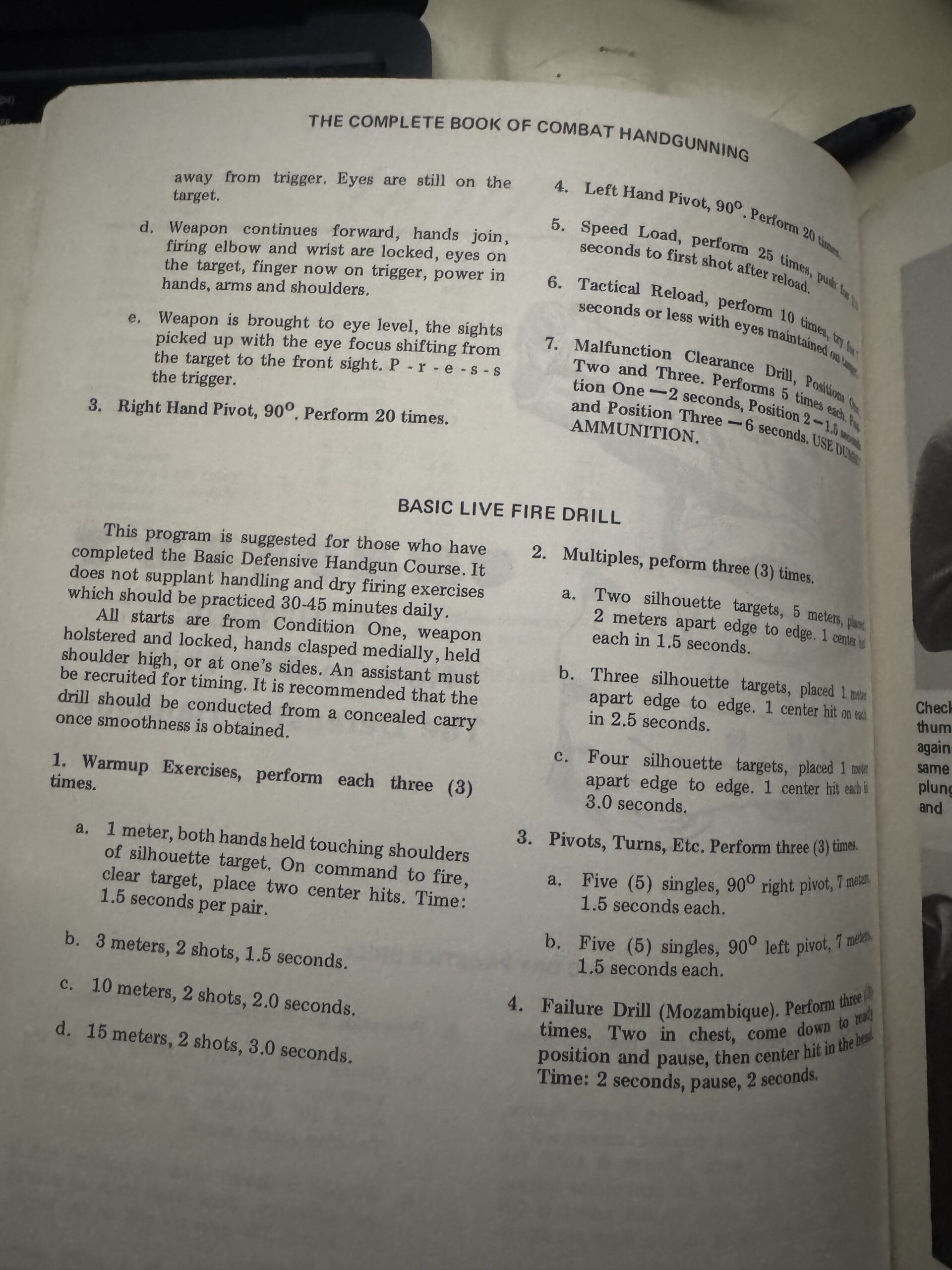
Book Monday – Today’s recommendation is a sadly overlooked and unappreciated book from 1982. Chuck Taylor was so important in the 80’s. He was a prolific writer, one of the first traveling instructors (after leaving Gunsite) and his first book was about the only easily available one covering modern defensive pistol use for years. It’s a solid book even today, with a good deal of still useful information. And as a historical item, it was so important to where we are today. It’s a shame Taylor and his works are little talked about. Cecil says look him up, and try to find his books.
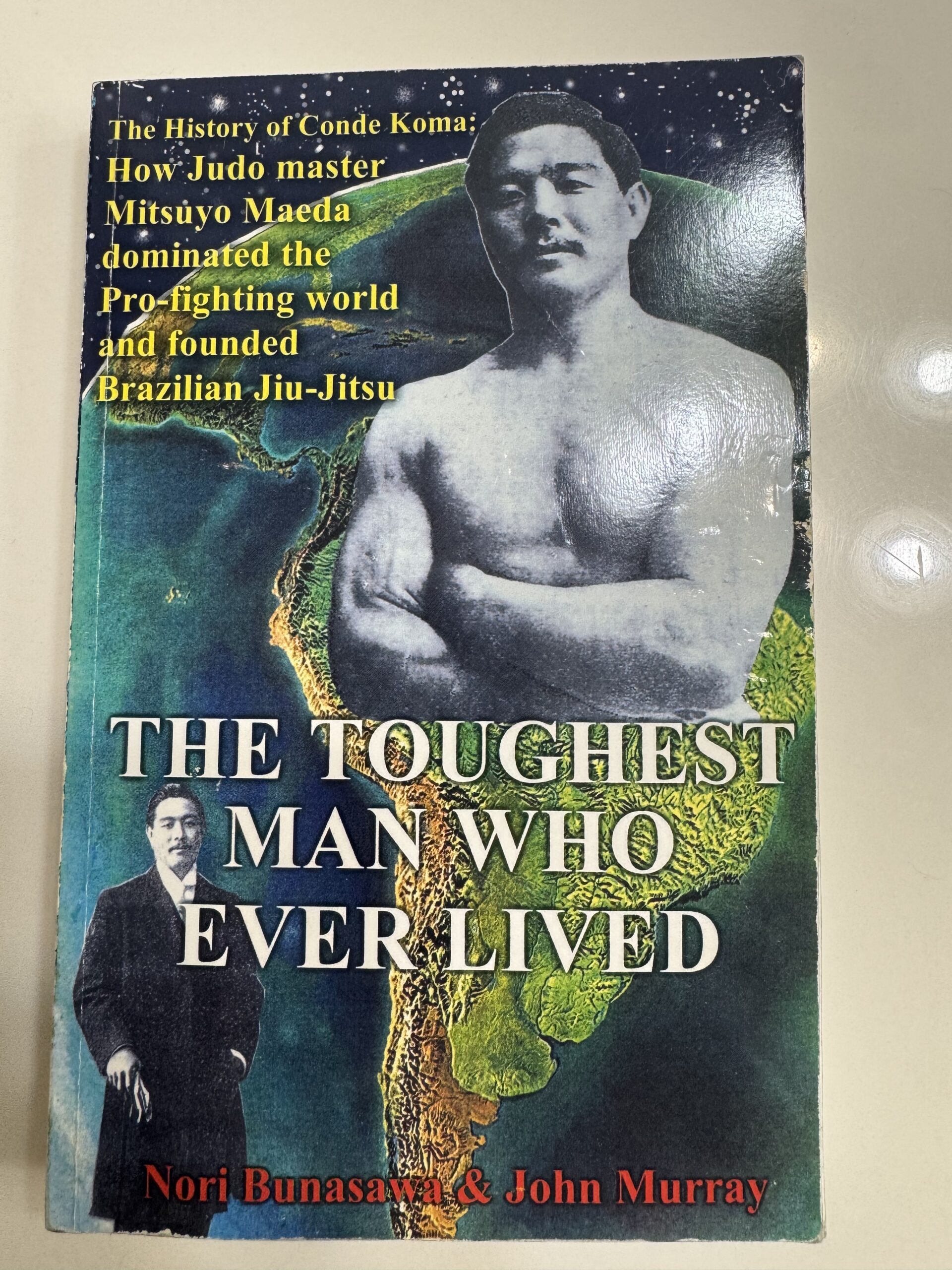
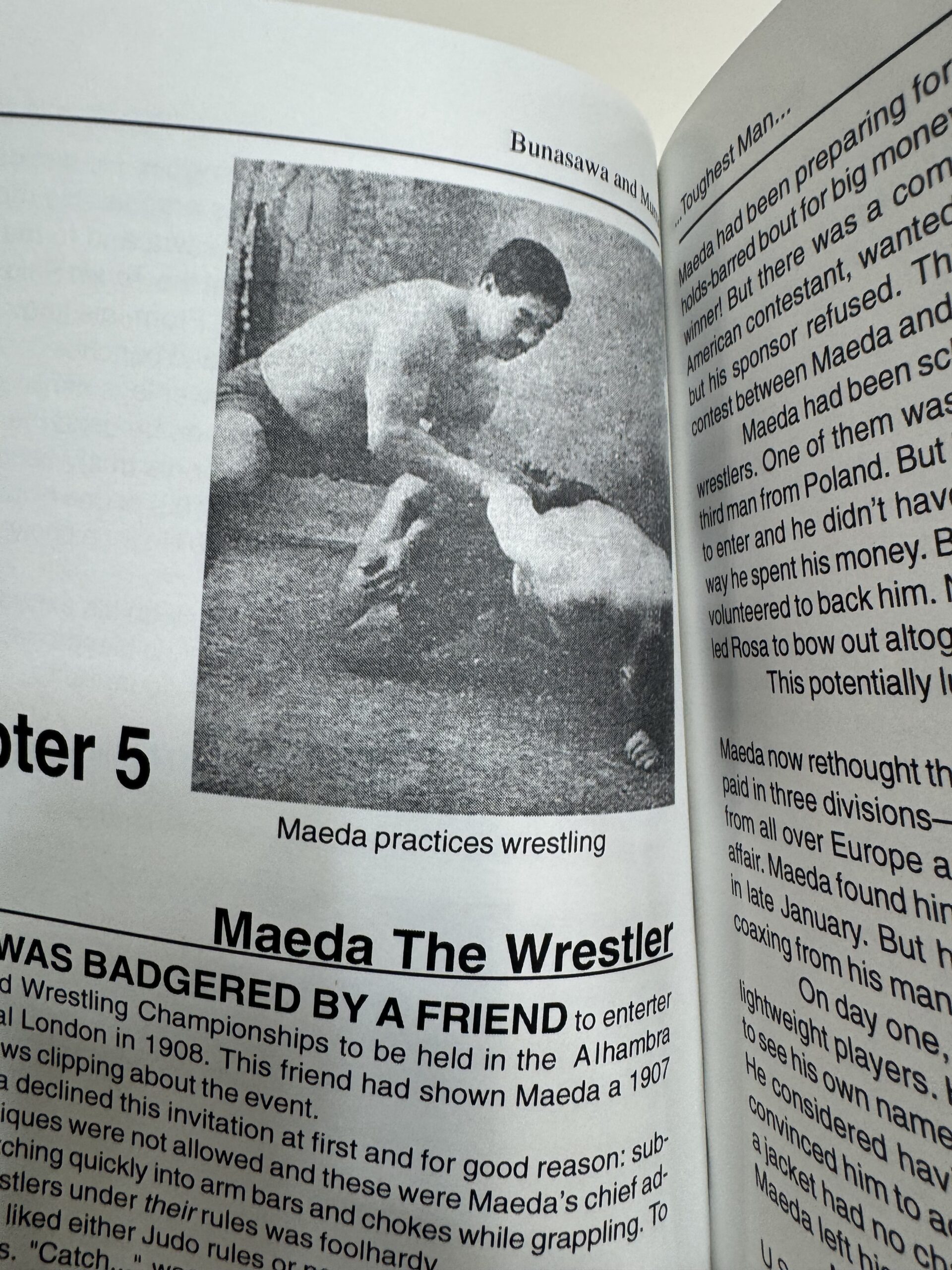
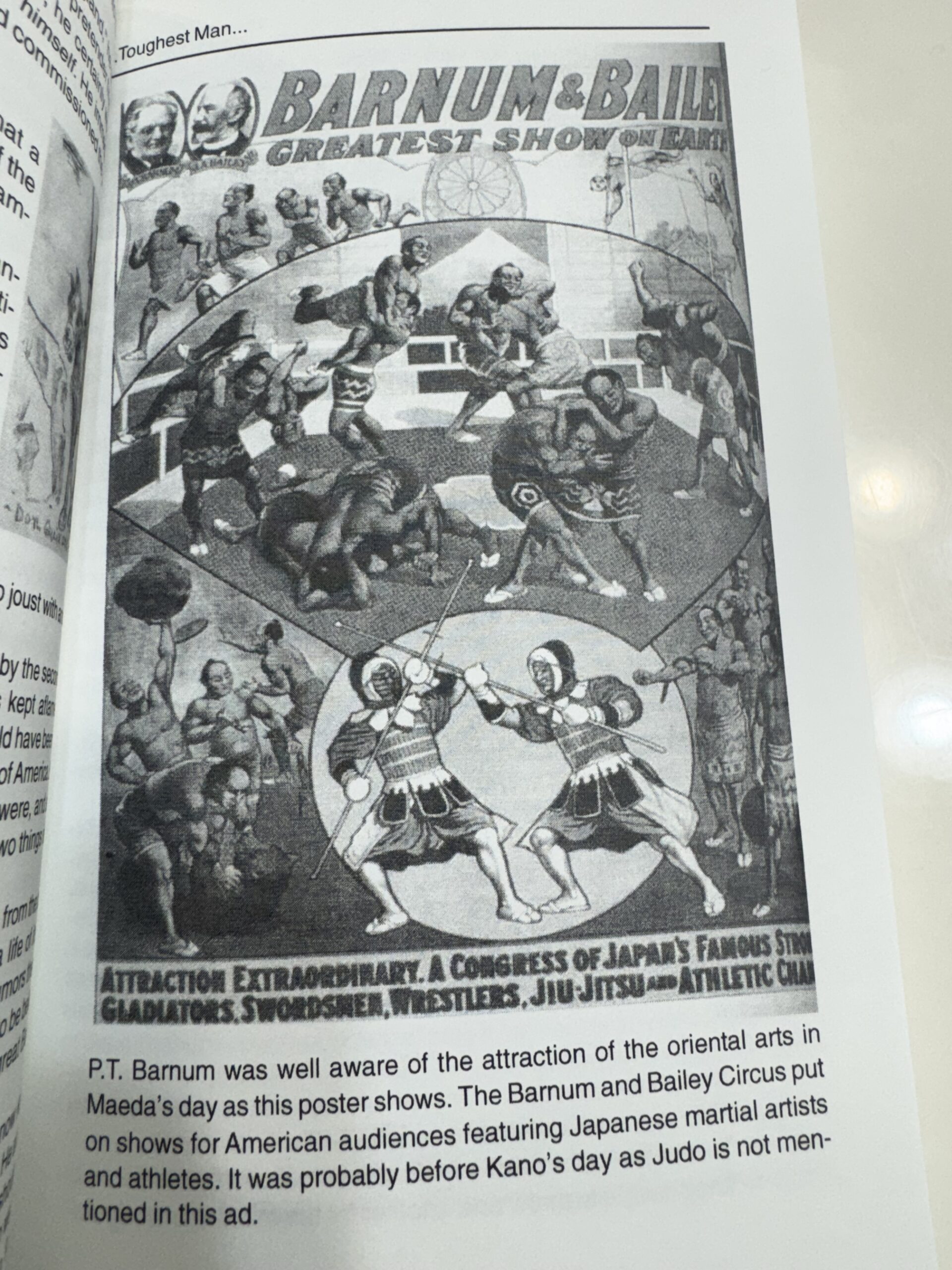
Monday Book Day – This biography of Mitsuyo Maeda is a terrific addition to us BJJ nerds who want to understand where the art we love comes from. For a long time, we knew little about Maeda outside of he was a great Judo practitioner who settled in Brazil and taught there in the early 1920’s. That was about it. But this book gives a complete story about this amazing martial artist, as well as some rare photos. Cecil says it is a must have if you love BJJ.